

Discounting: when to say no and what to trade instead
By Emmanuel Vasilakis · Published · 5 min read
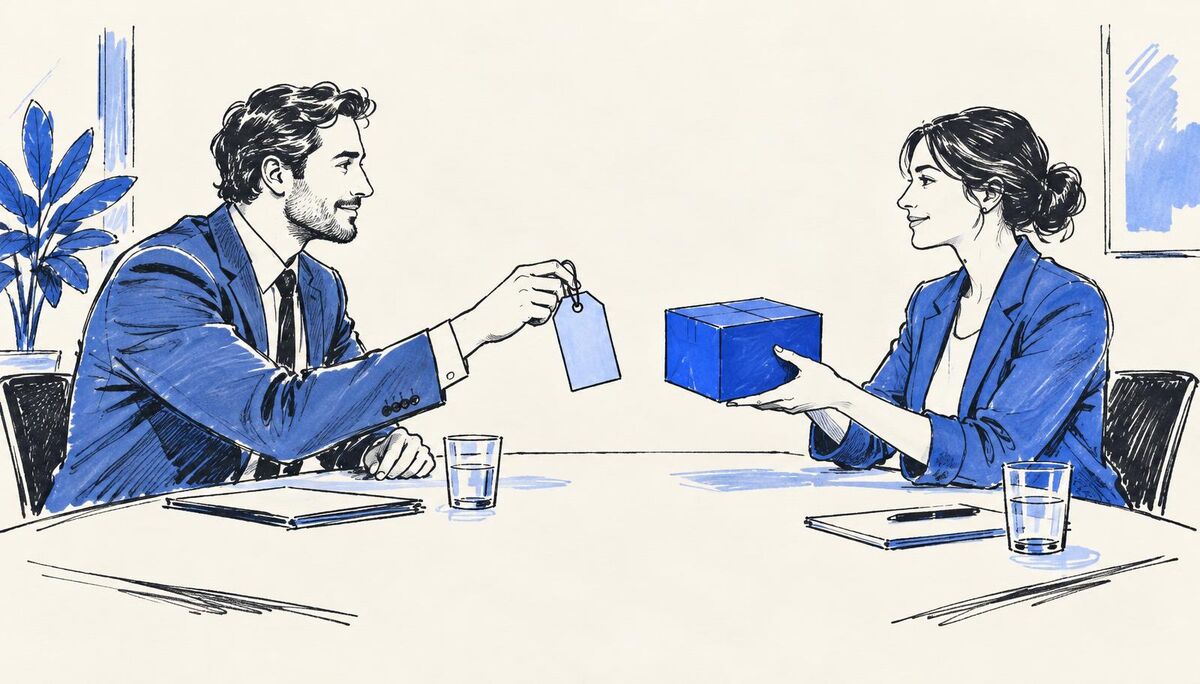
A discount costs far more profit than its percentage suggests, because it comes straight off your margin. Before giving one, find out why the buyer is asking: often it is habit or a test, not a real limit. If you do reduce the price, never give it away. Trade it for something of value, such as a longer contract, a larger order, faster payment or a case study. Set limits in advance so the decision is not made under pressure.
What a discount really costs
Take a product that sells for €100 and costs €60 to deliver. Your margin is €40.
| Price | Cost | Margin per sale | |
|---|---|---|---|
| Full price | €100 | €60 | €40 |
| 10% discount | €90 | €60 | €30 |
A 10% discount cuts your profit on each sale by 25% (€10 out of €40). To earn the same total profit, you need to sell about 33% more (€40 ÷ €30 = 1.33). The lower your margin, the worse this gets.
Why buyers ask
| Reason | What to do |
|---|---|
| Habit: they always ask | Hold the price politely; many will accept |
| Testing you | Hold the price and restate the value |
| A real budget limit | Reduce scope rather than price |
| A competitor is cheaper | Compare like with like before reacting |
| Their boss told them to get a discount | Give them something to report back, which need not be money |
Ask before you answer:
"Help me understand. Is it the total amount, or how it compares with something else you've seen?"
When a discount makes sense
- You get something back that is worth more than the discount.
- The deal opens a door: a first order from a large account with a clear path to more.
- Timing has value to you: for example, a signed contract before a planned price rise, if you have agreed this in advance.
A discount does not make sense to save a deal that is otherwise weak, to hit a monthly target at the last minute, or because the buyer simply asked.
How to say no
"I understand why you're asking. Our price reflects [what they get]. I'd rather make sure you get full value from it than reduce it."
"I can't move on the price, but I can look at the scope. If we start with two sites instead of four, the total comes down."
Say it calmly and then stop talking. Many buyers move on.
What to trade instead
If you do lower the price, ask for something in return:
- A longer commitment: two years instead of one.
- A larger order or more users.
- Faster payment: upfront or 15 days instead of 60.
- A reference or case study you can use with other buyers.
- A decision by a date that matters to you.
- Reduced scope: fewer features, less support or a later start.
Use an "if... then" form: "If you can commit to two years, then I can offer 5% off." This makes clear that the price moves only when something else does.
Set limits before the call
Decide in advance:
- The most you will give, and who must approve anything beyond it.
- What you will ask for in return at each level.
- Your walk-away point.
Decisions made in advance are calmer than decisions made with a buyer waiting for an answer.
Scripts at a glance
| They say | You say |
|---|---|
| "Can you do better on price?" | "What did you have in mind, and what's it based on?" |
| "Your competitor is 15% cheaper." | "Let's compare what's included in each. Can you share what they've offered?" |
| "We need a discount to sign today." | "If you can sign today and pay upfront, I can look at that." |
| "Just give me 10% and we're done." | "I can't do that on its own. If we extend to two years, I can do 5%." |
An example
Yiannis sells software to accounting firms at €12,000 a year. A firm in Patras asks for 15% off. He asks why. The partner says the figure was higher than she expected. Yiannis offers two options: full price with everything, or a starter plan at €9,000 without the reporting module. She asks whether he can do the full plan for less. He offers 5% off in return for a two-year contract paid annually in advance. She agrees. Yiannis gives €600 a year and gains a second year of revenue and earlier payment.
What the evidence says
That a discount reduces profit by more than its percentage is simple arithmetic. That buyers anchor on the first number they hear is Strong, found in many negotiation studies. That trading concessions instead of giving them away leads to better outcomes is Mixed, with support from negotiation research but few studies of B2B sales specifically. The scripts are Practice.
Frequently asked questions
Should I give a discount when a buyer asks? Not automatically. Find out why they are asking, and if you lower the price, ask for something in return.
How much profit does a 10% discount cost? It depends on your margin. With a 40% margin, a 10% discount cuts profit per sale by 25%.
What can I offer instead of a discount? Reduced scope, different payment terms or extra value that costs you little, such as onboarding help.
Check yourself
- A product sells for €100 and costs €60. What does a 10% discount do to profit per sale? Cuts it by 25%, from €40 to €30.
- What is the "if... then" form for? To show that the price moves only when the buyer gives something too.
- Name two things to ask for in return for a discount. Any two of: longer commitment, larger order, faster payment, a reference, a decision date, reduced scope.
Go deeper: free sample lesson
The Objection Handling course covers price pressure, concessions and how to hold value.
Related guides
- How to handle price objections in B2B sales
What "it's too expensive" usually means, the four causes behind price objections, what to say for each, and how to trade instead of discounting.
- Procurement objections: how to deal with purchasing teams
How to deal with procurement in B2B sales: what purchasing teams are measured on, when to involve them, common procurement objections and responses, and how to protect price.
- Objection handling role-play scripts for sales teams
Three ready-to-run objection handling role plays with buyer and seller briefs, a 45-minute session plan, a scoring sheet and tips for making practice feel real.
- Discovery questions that prevent objections later
30 B2B sales discovery questions grouped by what they uncover, how each one heads off a later objection, a call structure and the mistakes that make discovery feel like an interrogation.