

Outreach cadence: how many touches, on which channels
By Emmanuel Vasilakis · Published · 4 min read
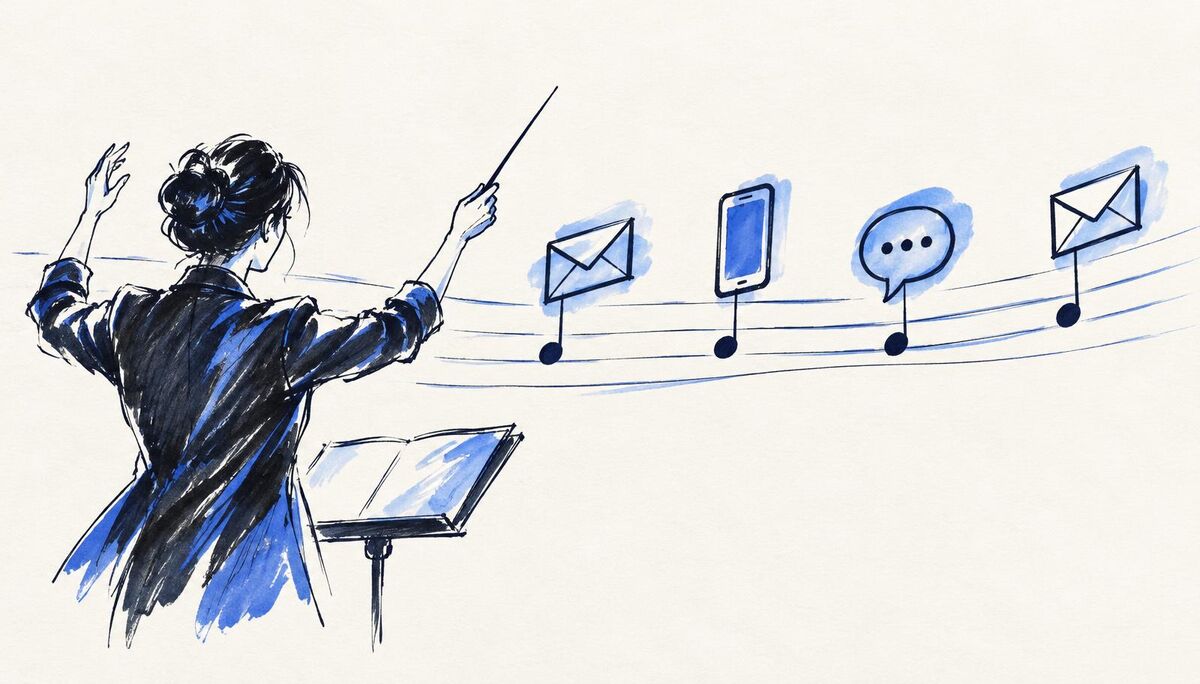
A sound B2B outreach cadence uses about six to ten touches over three to four weeks, mixing email, phone and LinkedIn, with touches closer together at the start and further apart later. Each touch should add something new rather than repeat "just following up", and the sequence should end with a short closing message. Spend more touches and more personal effort on prospects who fit your ideal customer profile best.
Why a sequence, not a single message
Most people do not reply to the first message. They are busy, the timing is wrong, or the email arrived on a bad day. A planned sequence gives several fair chances without becoming a nuisance, and it stops salespeople giving up after one attempt or sending eight identical emails.
Principles
- Mix channels. Some people answer email, some answer the phone, some only respond on LinkedIn.
- Space touches sensibly. Closer at first, further apart later. Two or three working days between early touches, a week between later ones.
- Add value each time. A new idea, a relevant example, a useful resource, a sharper question.
- Match effort to fit. Your best-fit prospects deserve more research and more personal messages.
- End cleanly. A final message that makes it easy to say "not now" often gets the most replies.
A 21-day cadence you can copy
| Day | Channel | Touch |
|---|---|---|
| 1 | First email: a specific reason for writing, a likely problem, one question | |
| 1 | Connection request without a pitch | |
| 3 | Phone | First call; if no answer, no voicemail yet |
| 5 | Reply to your first email with one new point or example | |
| 8 | If connected, a short message on the problem; otherwise engage with a post | |
| 10 | Phone | Second call, with a short voicemail referring to your email |
| 14 | Something useful: a checklist, a comparison or a short case | |
| 18 | Phone | Third call |
| 21 | Closing message: easy to answer, no pressure |
That is nine touches over three weeks across three channels. For lower-fit prospects, a lighter version with four or five touches is enough.
Example messages for the key touches
Day 5 email:
"Hi Dimitra, one more thought on morning route changes: one distributor I work with now freezes orders at 8:00 and re-plans once, which saves the dispatcher most of the morning. Would that be useful to talk through?"
Day 14 email:
"Hi Dimitra, we put together a one-page checklist on handling stock across two warehouses. Happy to send it if it's useful, no strings attached."
Day 21 closing email:
"Hi Dimitra, I don't want to fill your inbox, so this is my last note for now. If route planning becomes a priority, I'd be glad to help. If someone else handles it, I'd be grateful for a pointer."
When to stop, and when to come back
Stop the sequence immediately if someone replies, asks you to stop or is clearly the wrong person. If there is no response after the full sequence, pause. Many teams return after about three months with a new trigger or a new angle, because circumstances change.
Measure each step
Track replies by touch and by channel, not just for the whole sequence. If almost nobody replies to the day 14 email, change it. If calls produce most of your meetings, give them more weight. Change one step at a time and give it a few weeks.
Rules by channel
The rules for unsolicited contact differ by channel and by country in the EU. Some countries restrict cold email even to business addresses; some have registers of numbers that must not be called for marketing; LinkedIn has its own rules on messaging and automation. The GDPR applies to the personal data in your prospect list. Check the rules for each country and channel. This is not legal advice.
Common mistakes
- Stopping after one touch.
- Eight identical "just following up" emails.
- One channel only.
- The same intensive sequence for every prospect, whatever their fit.
- Automated sequences that ignore replies, sending the next step to someone who already answered.
What the evidence says
Published figures on the "right" number of touches mostly come from sales engagement software companies and are Weak; the honest answer depends on your buyers and is found by testing. The principles and the sample cadence are Practice.
Frequently asked questions
How many touches should a sales cadence have? Often six to ten over three to four weeks for best-fit prospects, fewer for lower-fit ones.
Which channels should a B2B cadence use? Usually a mix of email, phone and LinkedIn, because different buyers respond on different channels.
When should you stop following up? When the prospect replies, asks you to stop or is the wrong person, or after the full sequence with no response.
Check yourself
- How should spacing change through a cadence? Closer together early, further apart later.
- What should each touch add? Something new: an idea, an example, a resource or a sharper question.
- How should you decide which step to change? Track replies by touch and channel, and change one step at a time.
Go deeper: free sample lesson
The B2B Outreach course covers building sequences, choosing channels and measuring each step.
Related guides
- How to follow up when a prospect does not reply
Follow-up emails for every stage: after a first meeting, after a proposal and when a prospect goes quiet mid-deal, with timing, channel changes and a closing email that gets answers.
- LinkedIn prospecting: a weekly routine that books meetings
A weekly LinkedIn prospecting routine for B2B sellers: building the list, engaging before you message, connection notes and messages that work, and what to measure.
- Personalising outreach at scale without sounding generic
How to personalise B2B cold email at scale: a three-tier method, what counts as real personalisation, segment-level templates, time budgets and examples of weak and strong first lines.
- Sales and marketing alignment: lead definitions and service agreements
How to write a sales and marketing service level agreement: shared lead definitions, the numbers each side commits to, a worked funnel calculation and a template you can copy.